
live better, longer
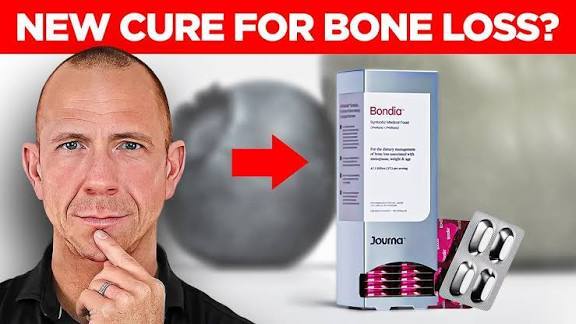
That's the question surrounding Bondia, a synbiotic medical food developed by Solarea Bio to support bone health through the gut microbiome.
An 85% reduction sounds impressive, especially for women concerned about osteopenia, osteoporosis, or declining bone density after menopause.
But whenever we see a claim like this, we need to ask a few questions.
What exactly improved by 85%? Did women actually build new bone? Was the benefit seen in everyone? And most importantly, does the research support using Bondia to prevent or treat osteoporosis?
A clinical trial published in Osteoporosis International in August 2025 gives us some answers.
The findings are interesting, particularly for women with osteopenia and certain metabolic risk factors. But there are also limitations worth understanding before deciding whether Bondia belongs in your bone health plan.
Let's look at what the research actually found.
Bondia showed promising results for slowing bone loss in certain groups of postmenopausal women, but the 85% claim does not apply to everyone.
In a 12-month randomized controlled trial involving 286 women, researchers found that Bondia did not significantly reduce lumbar spine bone loss across the entire study population.
However, women with osteopenia and women with a BMI of 30 or higher showed more encouraging outcomes in prespecified subgroup analyses.
The important distinction is that slowing bone loss is not the same as increasing bone density.
The research suggests Bondia may help some women preserve existing bone. It has not established that Bondia reverses osteoporosis, prevents fractures, or increases bone density in the broader postmenopausal population.
That makes it a potentially useful tool, but not a proven replacement for established osteoporosis treatments.
Bondia is a synbiotic medical food developed by Solarea Bio, formerly known as Jorna Health.
A synbiotic combines probiotics and prebiotics.
Probiotics are microorganisms that may provide health benefits when consumed in appropriate amounts. Prebiotics are substances that support the growth or activity of beneficial microorganisms.
Bondia combines targeted probiotic strains with prebiotic ingredients, including oligosaccharides and blueberry polyphenols.
Its purpose is to influence the gut microbiome in ways that may support bone health.
This is different from traditional osteoporosis medications.
Bisphosphonates and denosumab primarily reduce bone resorption. Anabolic medications stimulate bone formation.
Bondia takes a different approach by targeting the relationship between gut bacteria, inflammation, metabolism, and bone remodeling.
That relationship is often called the gut-bone axis.
The gut-bone axis describes the connection between intestinal health, gut microorganisms, immune signaling, nutrient metabolism, and bone health.
Your gut microbiome does much more than help digest food.
It participates in processes that affect inflammation, immune function, and the availability of certain nutrients.
These processes can influence the balance between two important types of bone cells:
Healthy bone remodeling depends on the coordinated activity of both.
After menopause, declining estradiol levels can increase osteoclast activity. This accelerates bone breakdown and may contribute to declining bone density.
Changes in immune signaling and inflammation may also play a role.
Researchers are investigating whether improving the gut microbiome can help create a more favorable environment for bone remodeling.
Bondia was developed to influence several biological pathways.
1. Short-chain fatty acid production
Certain gut bacteria produce short-chain fatty acids, including butyrate, when they metabolize dietary fibers and other compounds.
These substances help support intestinal health and may influence immune function and bone metabolism.
2. Gut barrier integrity
The intestinal barrier helps regulate what passes from the digestive tract into the bloodstream.
Disruptions in this barrier may contribute to inflammatory signaling.
Supporting gut barrier function could potentially reduce some of the inflammatory processes associated with bone loss.
3. Microbial nutrient metabolism
The gut microbiome participates in the metabolism of nutrients and compounds involved in bone health, including certain forms of vitamin K.
However, improving microbial activity does not automatically mean a person will increase bone density.
These are proposed biological mechanisms. Clinical trials are needed to determine whether they translate into meaningful benefits.
That brings us to the Bondia study.
The study was a 12-month, randomized, double-blind, placebo-controlled clinical trial.
It included 286 women who were between one and six years past menopause.
The participants were approximately 55 years old on average.
Importantly, women with osteoporosis were excluded.
That means the study focused on women with normal bone density or osteopenia, not women with established osteoporosis.
Participants received either the synbiotic medical food, identified in the study as SBD111, or a placebo.
Both groups were followed for 12 months.
The researchers measured several outcomes, including lumbar spine bone mineral density, hip bone density, bone turnover markers, inflammatory markers, and changes in the gut microbiome.
They also examined specific groups of women, including those with osteopenia and those with a BMI of 30 or higher.
Of the 286 women enrolled, 221 completed the study.
This was a meaningful study design because it moved beyond theoretical claims about probiotics and directly measured bone-related outcomes.
But the results were not uniformly positive.
No. The clinical trial did not find a statistically significant reduction in lumbar spine bone loss across the full study population.
The primary outcome was the change in lumbar spine bone mineral density after 12 months.
The estimated difference between Bondia and placebo was just 0.15 percentage points, with a confidence interval that included no benefit.
In other words, the study did not demonstrate that Bondia consistently protected lumbar spine bone density across all participants.
This is an important finding.
When evaluating a clinical trial, we should always look at the primary outcome first.
That is the main question the researchers designed the study to answer.
If the primary outcome is not statistically significant, we should not ignore that result simply because other findings look more promising.
However, it also does not mean that every aspect of the intervention failed.
The study included prespecified subgroup analyses that help explain where Bondia may have greater potential.
The study found encouraging evidence of reduced bone loss among women who already had osteopenia.
Osteopenia means bone mineral density is lower than normal but does not meet the diagnostic threshold for osteoporosis.
This matters because women with osteopenia may already be losing bone and may have more opportunity to benefit from an intervention designed to slow that process.
In the trial, the osteopenia subgroup included approximately 83 women.
Researchers reported a modest estimated benefit at the femoral neck, an important area of the hip because of its relationship to fracture risk.
The estimated treatment difference was approximately 0.89 percentage points.
However, the confidence interval crossed zero, meaning that this particular overall effect estimate did not establish a definitive benefit.
Other subgroup analyses suggested additional favorable bone density patterns.
The takeaway is not that Bondia has been proven to reverse osteopenia.
Rather, the findings suggest that women with existing low bone density may be a particularly important population for future research.
That distinction is important when translating early research into clinical recommendations.
This is probably the most important question in the entire discussion.
An 85% reduction in bone loss sounds like an enormous improvement.
But the percentage describes a relative reduction in the rate of bone loss, not an 85% increase in bone density.
Consider an illustrative example similar to the figures discussed in the study review.
Suppose one group loses 1.5% of its bone density over 12 months.
Another group loses only 0.25%.
The second group lost approximately 83% less bone than the first group.
That is a meaningful difference in the rate of decline.
But neither group gained bone.
Both groups still lost some bone density.
Imagine two women beginning menopause with identical bone density.
One loses bone relatively quickly each year.
The other loses bone much more slowly.
Over time, that difference could become important.
A strategy that consistently reduces bone loss may help preserve skeletal strength and potentially delay the progression from osteopenia to osteoporosis.
However, the word consistently matters.
The Bondia trial lasted 12 months.
We do not yet know whether the same benefit continues for five, ten, or twenty years.
We also do not know whether those changes translate into fewer fractures.
So while the 85% figure describes an encouraging subgroup result, it should not be interpreted as proof that Bondia prevents 85% of osteoporosis or fractures.
One of the more interesting findings involved women with a BMI of 30 or higher.
In this prespecified subgroup, Bondia was associated with significantly less bone loss at the total hip compared with placebo.
The estimated treatment difference was approximately 0.97 percentage points.
This finding raises an important question.
Could metabolic health and body composition influence how women respond to gut-focused bone health interventions?
Potentially.
Traditionally, higher body weight has sometimes been viewed as protective for bone because additional weight increases mechanical loading.
But body weight does not tell us everything.
Excess adipose tissue, especially visceral fat, can contribute to chronic inflammation and metabolic dysfunction.
Inflammation can influence the biological pathways involved in bone resorption.
So a woman may have higher body weight and still experience poor bone health.
And someone with a normal BMI may still have excess body fat and inadequate muscle mass.
This is why body composition matters.
BMI is a convenient screening tool, but it cannot distinguish muscle from fat.
Two women can have the same BMI and very different body compositions.
One may have relatively high muscle mass.
The other may have low muscle mass and higher body fat.
Those differences matter for bone health.
In the Bondia study, researchers also explored relationships between body fat percentage and treatment response.
Some exploratory analyses suggested that women with higher body fat percentages may have experienced greater differences in bone loss between the intervention and placebo groups.
These findings are interesting, but they should be interpreted cautiously because they do not carry the same evidentiary weight as the primary outcome or prespecified subgroup analyses.
Still, they reinforce a larger point.
If we want to understand osteoporosis risk, we should look beyond body weight.
Muscle mass, visceral fat, metabolic health, hormone status, and inflammation may provide a more complete picture.
Another important part of the research involved changes in intestinal microorganisms.
The study explored whether Bondia influenced microbial composition and pathways associated with short-chain fatty acid production.
These findings are relevant because changes in gut microbiota may help explain why some women responded differently.
Dr. Doug also highlighted potential relationships between excess body fat, reduced microbial diversity, inflammation, and bone turnover.
The underlying theory is that improving the intestinal environment could help reduce signals that contribute to excessive bone resorption.
But the evidence is still developing.
Changes in the microbiome are not the same as proven improvements in fracture risk.
They may help explain the mechanism, but they do not establish a clinical outcome by themselves.
There is currently insufficient clinical evidence to say that Bondia reverses osteoporosis.
The 2025 study excluded women with osteoporosis.
It also did not demonstrate a statistically significant benefit for the full study population.
Furthermore, it did not establish a reduction in fractures.
This means we cannot use the study to conclude that Bondia is an effective standalone treatment for established osteoporosis.
That does not mean the product has no potential.
It means its role is still being defined.
For women with osteopenia, particularly those with higher BMI or certain metabolic characteristics, the results may justify further investigation.
For women with osteoporosis, stronger and more specific clinical evidence is needed.
Not based on current evidence.
Probiotic and synbiotic interventions are being investigated as supportive strategies for bone health.
But they have not demonstrated the same level of fracture-risk evidence as established osteoporosis medications.
For someone with very high fracture risk, recent fragility fractures, or rapidly declining bone density, delaying appropriate medical treatment while relying solely on a probiotic could be dangerous.
A more reasonable question is whether microbiome-focused interventions may eventually become part of a comprehensive bone health plan.
That is where the potential becomes interesting.
At Optimal Human Health and The OsteoCollective, we approach bone health through multiple interconnected systems.
Bone health is influenced by far more than calcium intake or a single T-score.
Depending on the individual, a comprehensive strategy may include:
A synbiotic medical food may eventually have a place within this framework.
But it should be viewed as a potential supporting intervention, not the foundation of treatment.
There are several limitations worth understanding before interpreting the results.
First, the study did not achieve its primary endpoint across the full population.
Second, the study lasted only 12 months. We do not know whether favorable changes persist long term.
Third, the study excluded women with osteoporosis, which limits how broadly the results can be applied.
Fourth, the most encouraging results came from smaller subgroups. Even prespecified subgroup findings require confirmation in larger trials.
Finally, the study measured bone density and related biomarkers rather than demonstrating fewer fractures.
The study was also conducted with involvement from Solarea Bio, the company developing the product. Several authors disclosed employment or advisory relationships with the company.
Industry involvement does not invalidate research, but transparency matters when evaluating the evidence.
These limitations do not make the research unimportant.
They help us understand what conclusions are reasonable today and what questions still need to be answered.
The next step is to determine whether the encouraging subgroup findings can be reproduced.
Future studies should examine women who already have osteopenia, older women, and women with established osteoporosis.
It would also be valuable to investigate whether baseline inflammation, body fat percentage, gut microbiome composition, or hormone status predicts treatment response.
Longer follow-up could help answer whether slowing bone loss for one year translates into meaningful differences over time.
And ultimately, we need to know whether those differences reduce fracture risk.
Those are the questions that will determine whether Bondia becomes an established part of osteoporosis care.
Bondia represents an interesting approach to bone health because it targets a system that traditional osteoporosis treatments generally do not address directly: the gut microbiome.
The 2025 clinical trial found promising evidence that some women, particularly those with osteopenia or higher BMI, may benefit from this approach.
But the research does not show that Bondia works equally well for every postmenopausal woman.
It also does not prove that Bondia reverses osteoporosis or prevents fractures.
The 85% reduction claim is best understood as a relative difference in bone loss in a selected group, not an overall improvement in bone density.
That distinction matters.
The most exciting part of this research is not that we have found a single product that solves osteoporosis.
It is that we are continuing to identify new biological pathways that may help us prevent bone loss more effectively.
And the gut-bone axis is one of those pathways worth watching.
The 2025 clinical trial did not demonstrate a significant overall increase in bone density. Some subgroup findings suggested that Bondia may help reduce bone loss, but that is different from consistently building new bone.
The 85% figure refers to a relative reduction in bone loss reported for a selected population. It does not mean participants increased bone density by 85%, and the finding should not be generalized to all women.
Bondia is a synbiotic medical food containing probiotics and prebiotics. It is not an FDA-approved osteoporosis medication.
The available study provides promising evidence of benefit in women with osteopenia, but the results need confirmation in larger studies before definitive recommendations can be made.
Bondia has not been proven to treat or reverse osteoporosis. Women with osteoporosis were excluded from the 2025 clinical trial.
The gut microbiome influences nutrient metabolism, inflammation, and immune signaling. These processes may affect the balance between bone formation and bone resorption.
The available clinical trial did not demonstrate a reduction in fractures. Longer and larger studies would be needed to evaluate that outcome.
No. Bondia should not be considered a replacement for adequate nutrition, appropriate exercise, medically indicated hormone therapy, or established osteoporosis treatment.
Understanding the latest research is important, but knowing how to apply it to your individual situation is even more valuable.
At The OsteoCollective, we help people understand the bigger picture of bone health, including nutrition, exercise, hormones, gut health, imaging, and the biomarkers that can help track progress.
If you're trying to figure out what actually matters for your bones, join our free Bone Health Masterclass.
We'll walk through common mistakes people make when addressing osteoporosis and help you better understand the tools available to support stronger bones and long-term health.
Because osteoporosis is not the end. Deciding to take action is the beginning.
This article is intended for educational purposes only and does not constitute medical advice. Bondia and other microbiome-focused interventions should not replace medically indicated treatment for osteoporosis. Always consult a qualified healthcare professional before starting a new medical food, supplement, medication, or bone health treatment plan, particularly if you have osteoporosis, a history of fractures, significant medical conditions, or take prescription medications.

Your Blueprint for Lasting Bone Health and Longevity


Join us LIVE November 5th, 2026 at 3:00pm EST to Learn Dr. Doug's proven framework for Osteoporosis Reversal for FREE. Yes! Reversing Osteoporosis is possible and has happened for hundreds of Dr. Doug's patients.
If you have been blind-sided, feel stuck, confused, and exhausted with your diagnosis, this Masterclass is for you!


