
live better, longer
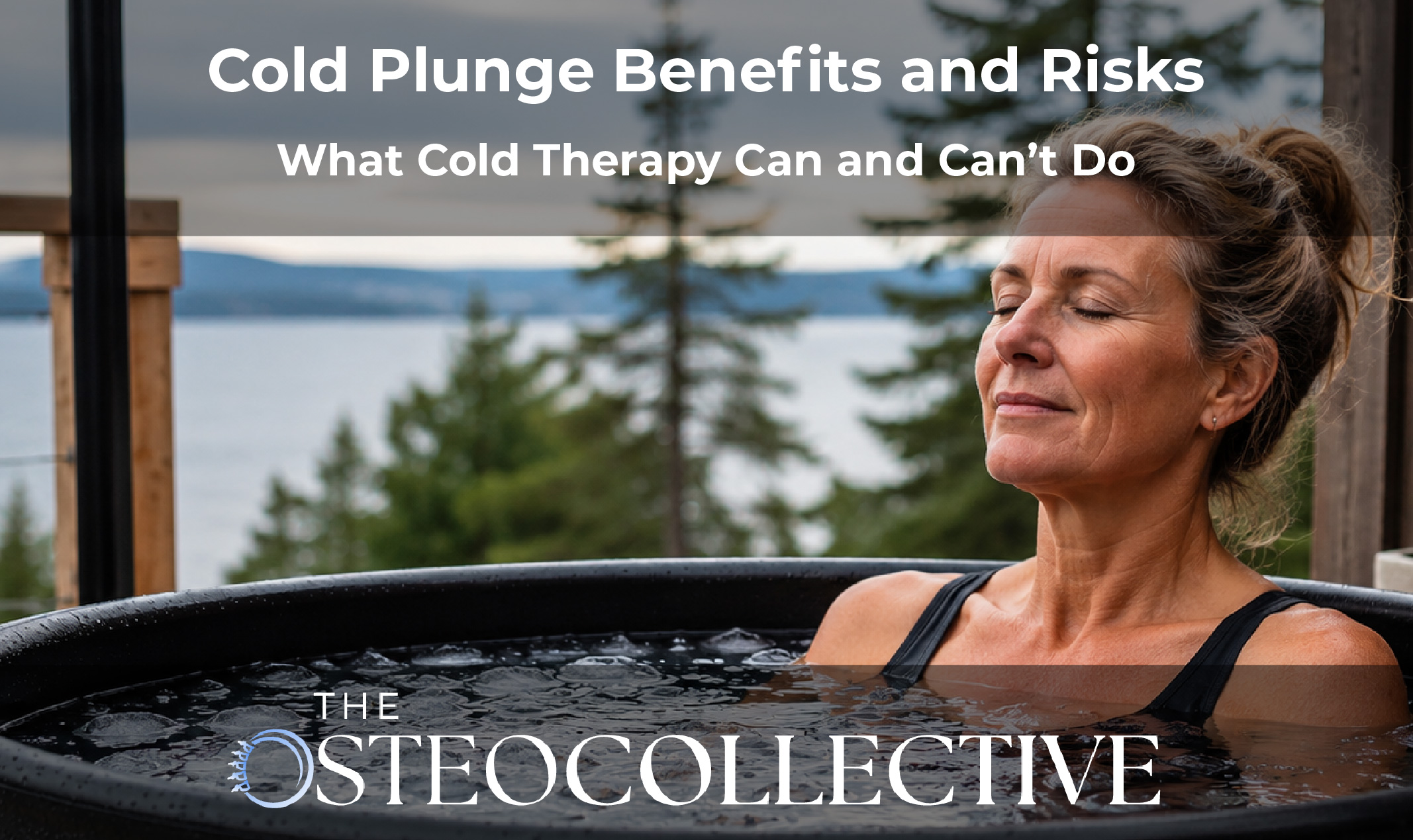
Cold plunges are everywhere right now.
You see them on social media. You hear about them on podcasts. People are buying cold plunge tubs, taking ice baths, ending showers on cold, and talking about how it changed their energy, mood, recovery, and resilience.
But the big question is this:
Is cold therapy actually beneficial, or is it just another wellness trend?
The answer is more interesting than most people realize.
Cold water immersion does appear to have real benefits. It may help with recovery, soreness, inflammation, mood, energy, insulin sensitivity, sleep, and even some cardiovascular risk markers.
But it is not all upside.
Cold therapy is a stressor. And like every stressor, the dose matters. The timing matters. The person matters. And if you use it the wrong way, it may actually interfere with muscle growth and strength gains.
So let’s walk through what cold water immersion may help with, where the evidence is strongest, where the hype gets ahead of the data, and how to think about using it safely.
Cold therapy can mean several different things.
It may include:
The most common form people talk about today is cold water immersion, often called a cold plunge.
This usually means submerging the body in cold water for a set amount of time. The water may be mildly cold, very cold, or close to freezing, depending on the setup and the person’s tolerance.
Cold water is more intense than cold air because water conducts temperature more efficiently. That means 50-degree water feels very different from 50-degree air.
The list of claimed benefits is long.
People use cold therapy for:
That is a lot.
And surprisingly, some of these benefits are supported by research, although many studies are small.
That matters because cold therapy is hard to study at a large scale. There is not always a major financial incentive to fund big trials on something people can do for free with cold water.
Still, the research we do have gives us useful clues.
One of the biggest reasons people use cold plunges is recovery.
If you train hard, lift weights, run, bike, compete, or do high-intensity exercise, recovery matters.
Cold water immersion has been studied against other recovery methods, including active recovery and contrast water therapy. Some research suggests cold water immersion may be better than active recovery for reducing soreness and improving perceived recovery.
That “perceived recovery” piece matters.
If you feel less sore and more recovered, you may be more likely to train well the next day. You may move better, feel more motivated, and stay more consistent.
That does not mean cold therapy automatically makes you stronger. But it may help you feel ready to train again.
Cold water immersion appears to reduce muscle soreness after hard exercise.
This is especially relevant after:
Some studies also show reductions in creatine kinase, a marker associated with muscle damage.
That suggests cold water immersion may help reduce some of the muscle damage response after training.
Again, that can be helpful if your goal is to recover quickly.
But there is a tradeoff, especially if your goal is building muscle.
We’ll come back to that.
Cold water immersion is not relaxing at first.
Your body sees cold exposure as a stress.
Depending on the temperature and duration, cold exposure can increase:
This is part of why people feel energized afterward.
Cold exposure can create a surge of catecholamines, which are hormones and neurotransmitters involved in alertness, energy, focus, and stress response.
That can be a good thing.
But if you are already under high stress, chronically inflamed, exhausted, underslept, or burned out, adding another stressor may not be the right move.
This is one of the biggest mistakes people make with cold therapy.
They assume more discomfort always equals more benefit.
That is not true.
Cold exposure may not be ideal during periods of high stress or poor recovery.
You may want to be cautious if you are:
In those situations, cold therapy may add more stress than benefit.
The goal is not to prove how tough you are.
The goal is to use the tool in a way that supports your health.
Cold exposure may improve mood and energy.
Some studies on winter swimming and cold exposure report improvements in:
That lines up with what many people report anecdotally.
After a cold plunge, many people feel awake, alert, energized, and mentally clear.
Some of that may come from norepinephrine and dopamine changes. Some may come from the psychological effect of doing something difficult and getting through it.
That mental resilience piece is real.
Starting the day by doing something hard can shift how you feel about the rest of the day.
Cold exposure may help reduce pain perception for some people.
Some research and anecdotal reports suggest benefits in people with:
This does not mean cold therapy treats the root cause of pain. But it may help modulate pain perception and inflammatory signaling in some people.
Again, the dose matters.
Very cold water for a short time is very different from moderately cold water for a long time.
Cold exposure is often linked to brown fat.
Brown fat, or brown adipose tissue, is a type of fat that helps generate heat. Babies have more brown fat because they cannot shiver as effectively as adults.
As we age, we generally have less active brown fat.
Cold exposure may activate brown fat and increase energy expenditure. This is one reason people talk about cold therapy for metabolism.
Some studies suggest cold exposure can influence:
One cold exposure study using cold air found a significant improvement in insulin sensitivity in overweight individuals. The exposure was long, several hours per day, so it is not a realistic protocol for most people. But it does suggest that cold adaptation may have metabolic effects.
The big takeaway is this:
Cold exposure may support metabolic health, but it is not a fat-loss miracle.
It does not replace nutrition, muscle mass, walking, strength training, sleep, or blood sugar control.
Some research suggests cold-adapted swimmers may have favorable cardiovascular markers, including lower ApoB and homocysteine.
ApoB is a marker related to atherogenic lipoprotein particles. Homocysteine is another marker that can be associated with cardiovascular risk when elevated.
That is interesting.
But we need to be careful.
Lower markers do not automatically prove fewer heart attacks or strokes. To know that, we would need larger, longer studies looking at actual cardiovascular outcomes.
Still, it is reasonable to say cold exposure may influence certain cardiovascular risk markers in some populations.
But it is also important to remember that cold exposure can acutely raise blood pressure, heart rate, and stress hormones.
For people with cardiovascular disease, arrhythmias, uncontrolled blood pressure, or other risk factors, cold plunging should be approached carefully and with medical guidance.
This is one of the most common questions.
Does it need to be freezing?
Is a cold shower enough?
Is 60 degrees cold enough?
Do you need ice?
The answer depends on your goal, your tolerance, and your risk level.
Research suggests that different temperatures can produce different effects.
For example:
A practical way to think about it:
The colder the water, the shorter the exposure should usually be.
Many people do well somewhere in the range of 45 to 60 degrees Fahrenheit, depending on experience and tolerance.
You do not need to prove anything by going as cold as possible.
There is no perfect number for everyone.
Some research uses:
For practical use, many people start with short exposures and build slowly.
A reasonable beginner approach might be:
More is not always better.
The goal is a hormetic stressor, not hypothermia.
Cold exposure may influence sleep, but timing matters.
Some research suggests cold water immersion may reduce movement during sleep and deepen sleep in certain contexts. But it may also temporarily lower heart rate variability because it creates a stress response.
For some people, morning cold exposure may improve energy during the day and sleep indirectly.
For others, cold exposure too late in the day may feel stimulating and make sleep harder.
This is individual.
If sleep is your main goal, pay attention to timing and track how you respond.
This is one of the most important points.
Cold water immersion immediately after strength training may blunt muscle growth and strength gains.
Some research has shown that cold water immersion after resistance training can reduce:
That matters, especially for people focused on bone health and health span.
Why?
Because muscle is one of the most important tools for aging well. It supports metabolism, balance, strength, independence, and bone health.
If your primary goal is building muscle, you may not want to cold plunge right after lifting.
This does not mean you can never use cold therapy. It means timing matters.
If your goal is endurance recovery or soreness reduction after competition, cold therapy after training may be useful.
If your goal is strength and hypertrophy, be more cautious.
A better approach may be:
For people with osteoporosis, this is especially important because muscle growth matters.
You do not want your recovery tool to interfere with one of your most important bone health tools.
Cold therapy is not risk-free.
Potential risks include:
Never cold plunge alone in risky settings. Be especially cautious with lakes, rivers, oceans, or deep water.
Cold shock can cause panic breathing and loss of control. That can be dangerous fast.
People with heart disease, uncontrolled blood pressure, arrhythmias, Raynaud’s, neuropathy, frailty, pregnancy, or serious medical conditions should talk to a clinician before starting.
Cold showers can still be useful.
They are accessible, free, and easy to start with.
A cold plunge is more controlled because you can set the temperature and immerse more of the body. But you do not need an expensive cold plunge to get started.
Options include:
The best tool is the one you can do safely and consistently.
A simple starting point:
For a more advanced routine, some people may tolerate around 3 minutes in the high 40s Fahrenheit.
But that is not where everyone should start.
Your protocol should match your body, your goals, and your health status.
One of the most overlooked benefits of cold therapy is psychological.
Cold water is uncomfortable.
But learning to sit with discomfort, breathe through it, and stay calm can be powerful.
Modern life is designed to make us comfortable. Heat, air conditioning, food delivery, screens, convenience, and constant stimulation make it easy to avoid discomfort.
But controlled discomfort can build resilience.
Cold therapy can be one way to practice that.
Not because suffering is the goal.
But because intentionally doing hard things can remind you that you are capable of more than you think.
Cold therapy is not magic.
But it is also not just hype.
Cold water immersion may help with recovery, soreness, inflammation, pain perception, mood, energy, insulin sensitivity, sleep, and certain cardiovascular markers.
But it also creates stress. It can be risky for some people. And if used immediately after strength training, it may blunt muscle growth and strength gains.
So use it strategically.
Cold therapy should support your health span, not compete with your most important goals.
For many people, the best approach is short, consistent, controlled exposure, ideally away from heavy strength training sessions if muscle growth is a priority.
Seek optimal, not average. And remember, discomfort can be a useful teacher when used wisely.
This content is for educational purposes only and is not medical advice. Cold water immersion may not be appropriate for everyone. It can be risky for people with cardiovascular disease, uncontrolled blood pressure, arrhythmias, fainting risk, Raynaud’s, neuropathy, pregnancy, or other medical concerns. Speak with a qualified healthcare professional before starting cold therapy, especially if you have a medical condition or take medications

Your Blueprint for Lasting Bone Health and Longevity

.svg)
.svg)
.svg)
.svg)


Join us LIVE September 24th, 2026 at 3:00pm EST to Learn Dr. Doug's proven framework for Osteoporosis Reversal for FREE. Yes! Reversing Osteoporosis is possible and has happened for hundreds of Dr. Doug's patients.
If you have been blind-sided, feel stuck, confused, and exhausted with your diagnosis, this Masterclass is for you!

.svg)

.svg)
